

Welcome to the Tower Hill Heritage Garden Lilac Walk. The plants were selected for the Garden because their attributes make them good choices for the home garden in our area, for their variety of colour and fragrance and to extend the bloom season.

If you visit the Garden while the Lilacs are in bloom, a walk around the Tower will introduce you to twenty-two different lilac cultivars that will do well almost anywhere in Ontario.
Start your walk between the stone pillars and proceed counterclockwise around the the Tower. The plants have their numbers painted on a rock at their base.
Number 1
Syringa x hyacinthiflora“Maiden Blush”
An exceptionally fine early blooming hybrid with fragrant pink to lavender-pink flowers.
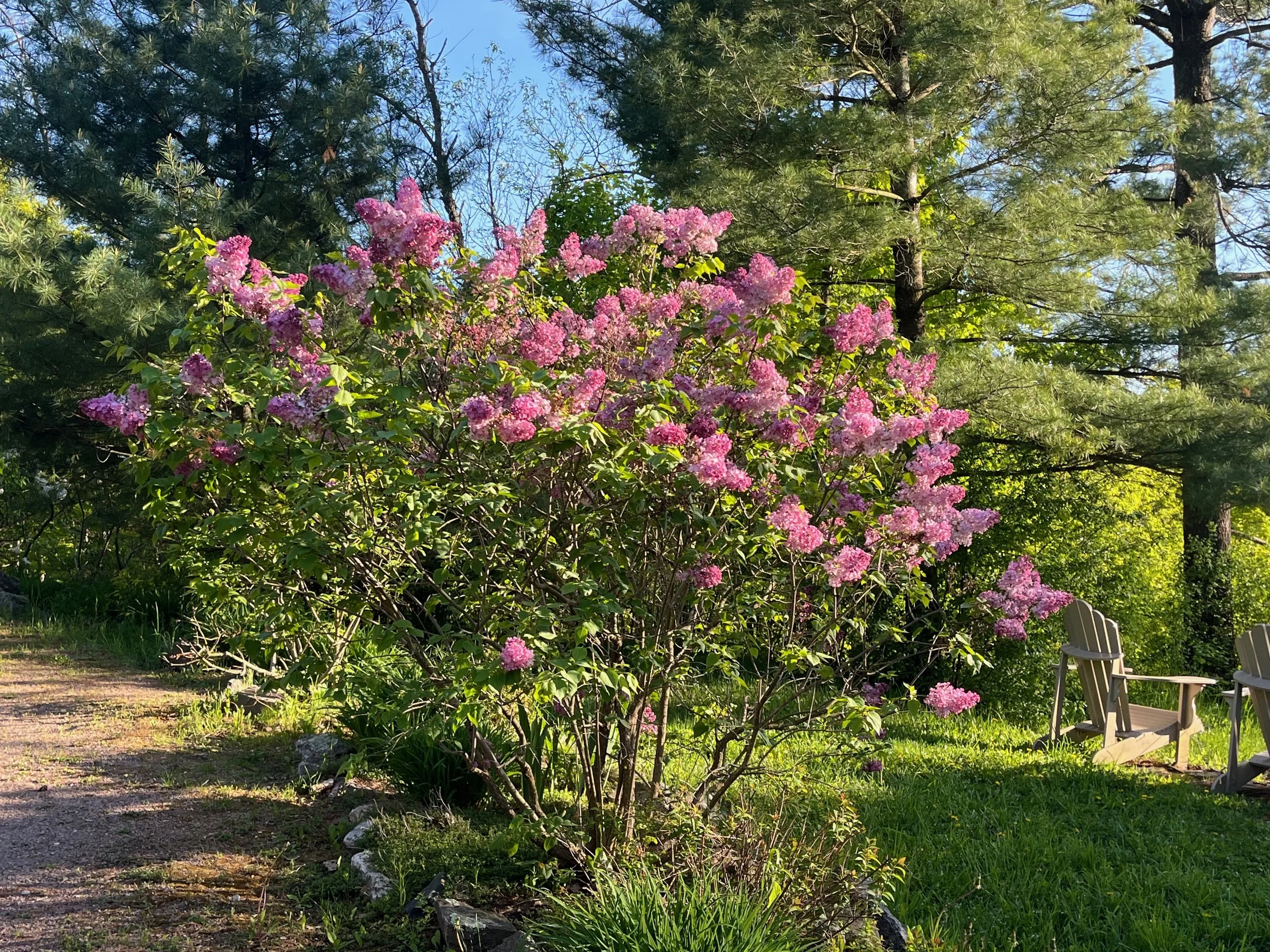
Maiden Blush
Number 2
Syringa “Miss Canada” (Preston Lilac)
A heavily flowering cross between “Redwine” and “Hiawatha” with deep rose-pink flowers. The flower spikes are very unique.

Miss Canada
Number 3
Syringa patula “Miss Kim” (Korean Lilac)
A hardy fragrant lilac.Blooms when others have finished with pale pink coloured flowers

Miss Kim
Number 4
Syringa x hyacinthiflora“Mt. Baker”
A very hardy cultivar that blooms before the French hybrids. Profuse, single white flowers
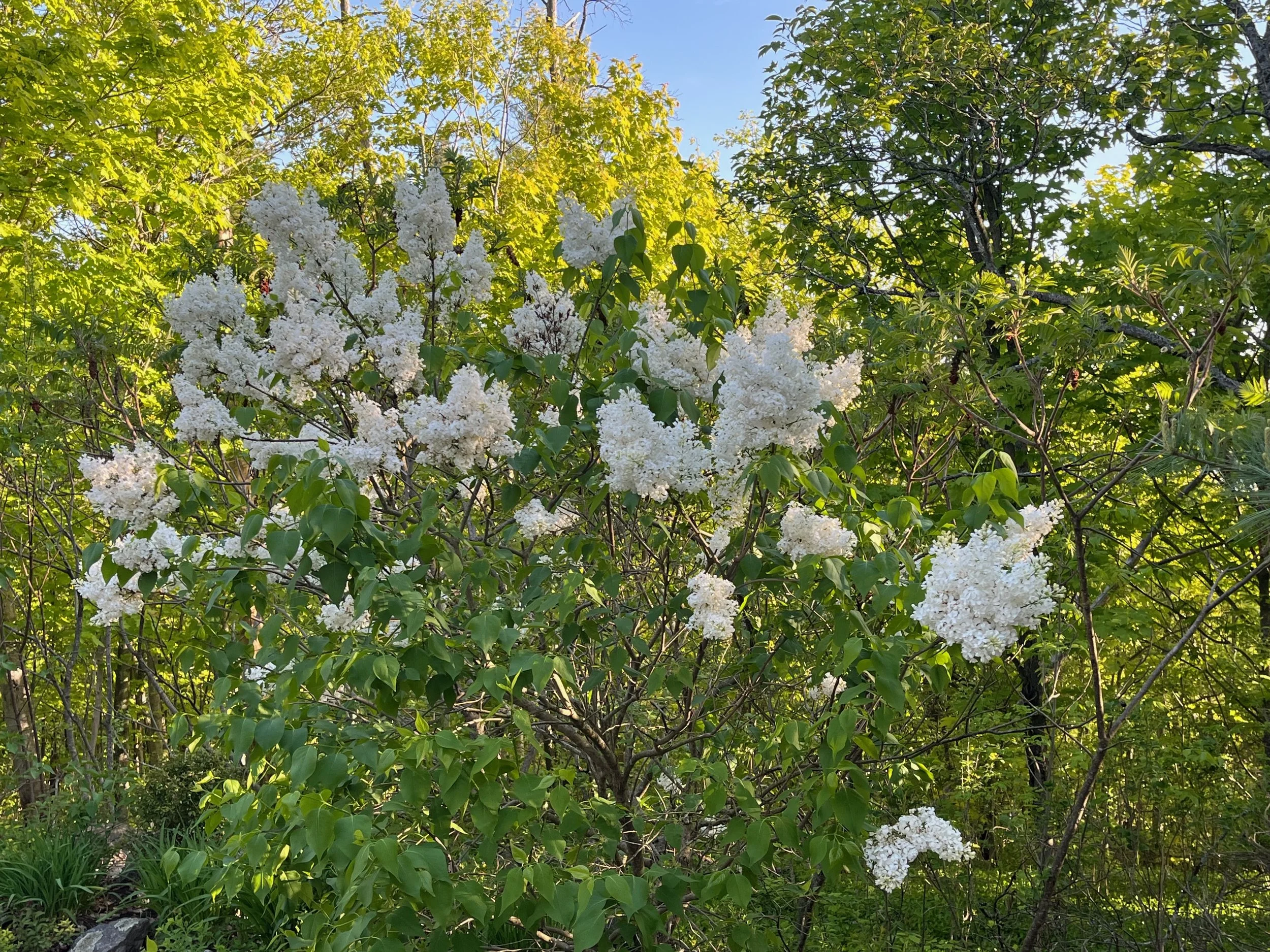
Number 5
Syringa “Ludwig Spaeth” (French Hybrid)
An old cultivar, but still one of the best purples.
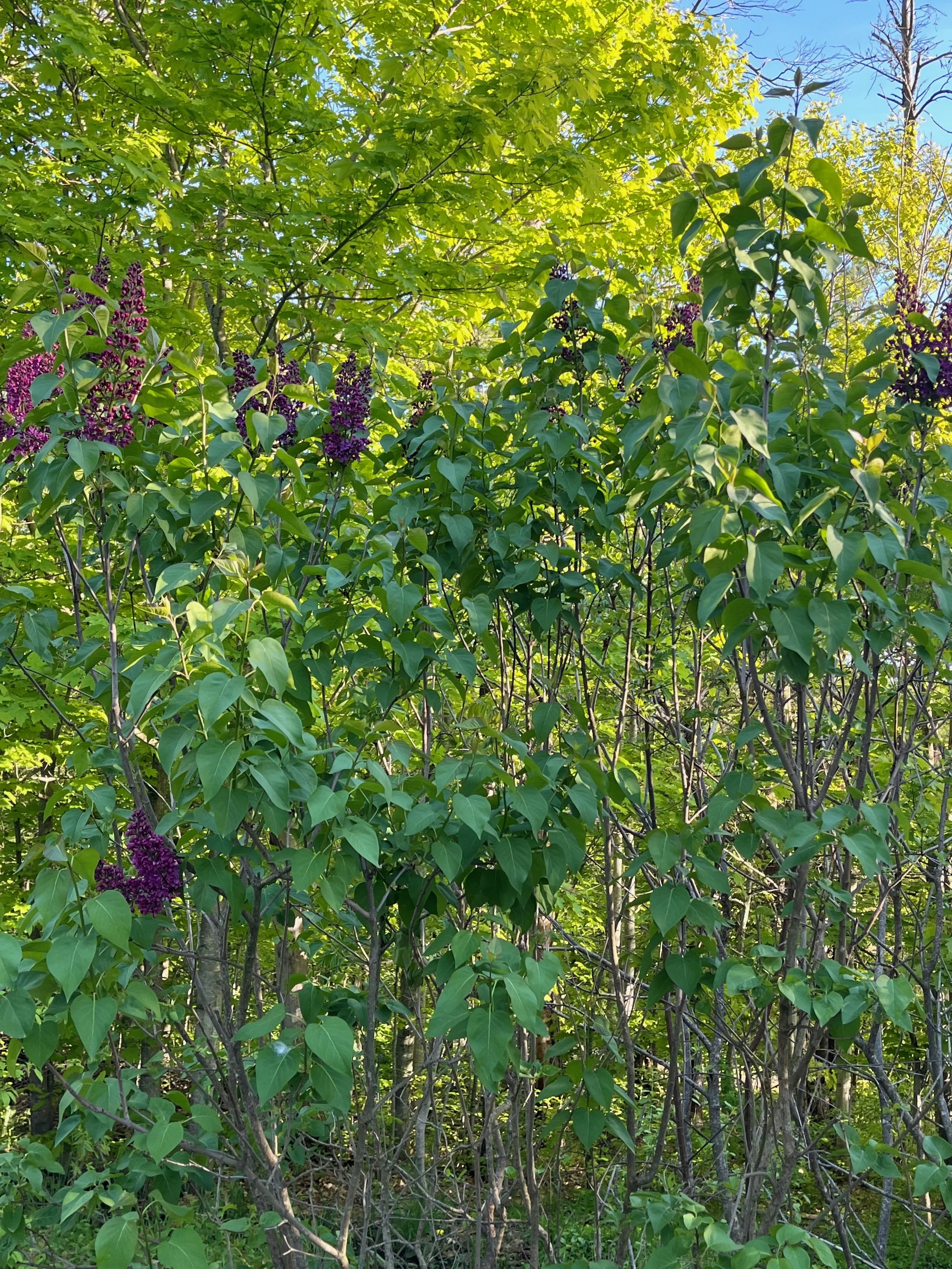
Number 6
Syringa meyeri“Palibin” (Dwarf Korean)
Fragrant flowers bloom profusely on this unusual dwarf variety. Excellent uniform habit and maroon fall colour.

Palibin in bloom (behind irises)
Number 7
Syringa“Belle de Nancy” (French Hybrid)
Double pink flowered cultivar
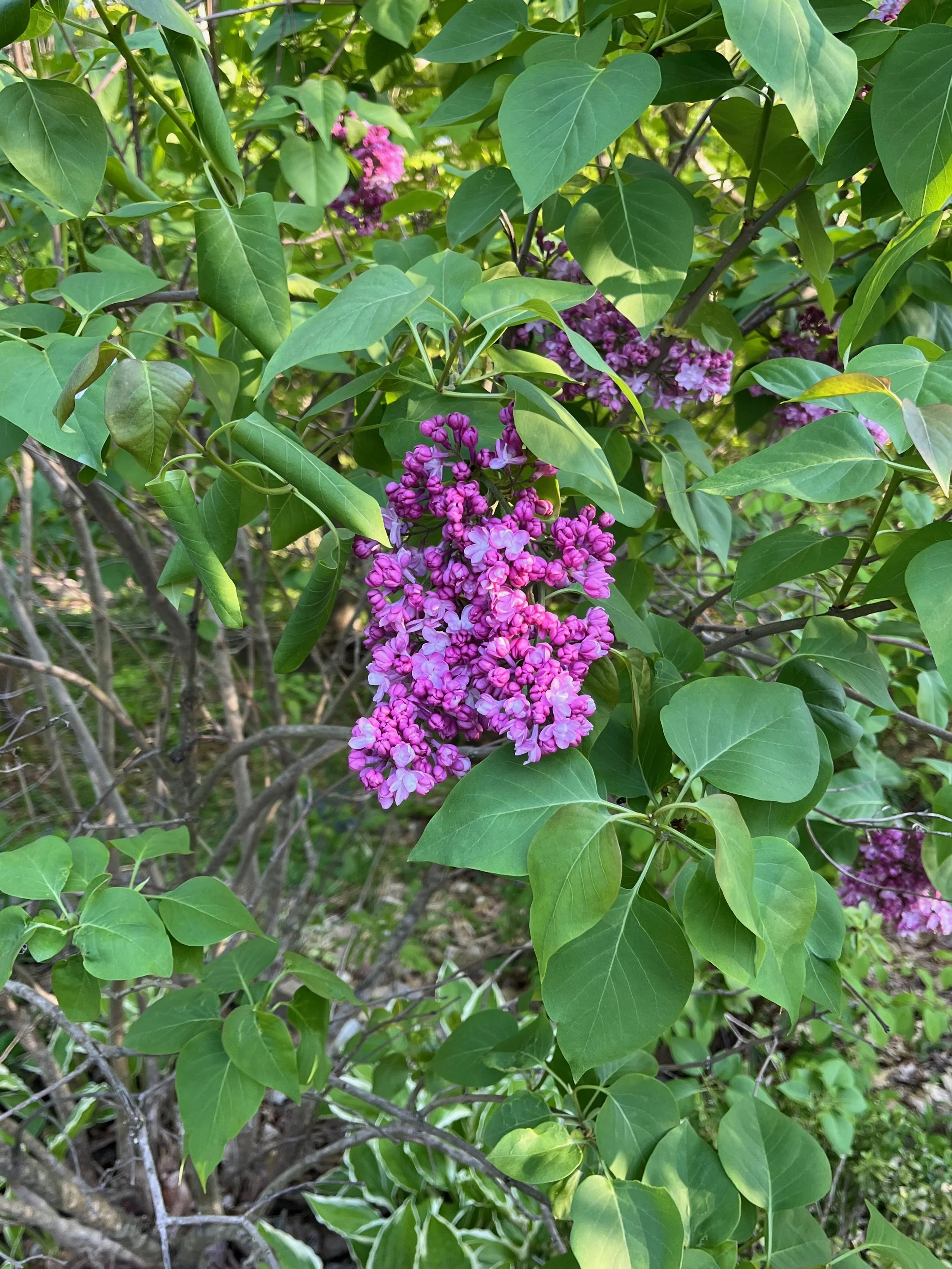
Number 8
UnidentifiedSyringa
Number 9
UnidentifiedSyringa“Grandma Ballantyne”
A gift of one of the Tower Hill Gardeners, named by the group for her mother
Number 10
Syringa “Paul Thirion” (French Hybrid)
Double magenta flowers
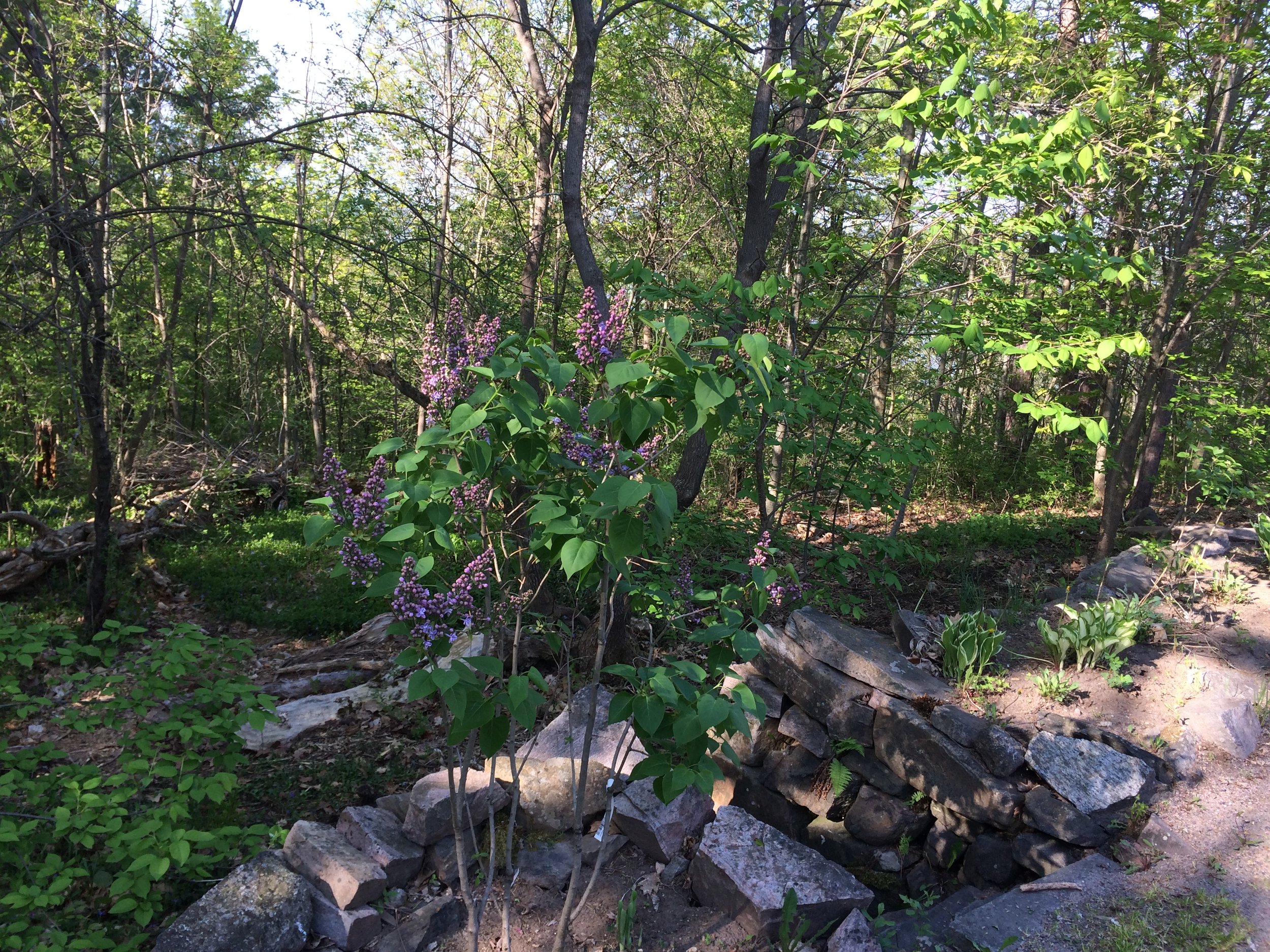
Paul Thirion
Number 11
Syringa x hyacinthiflora“Purple Glory”
An early, long lasting bloomer with a delicious fragrance. Purplish fall colour.
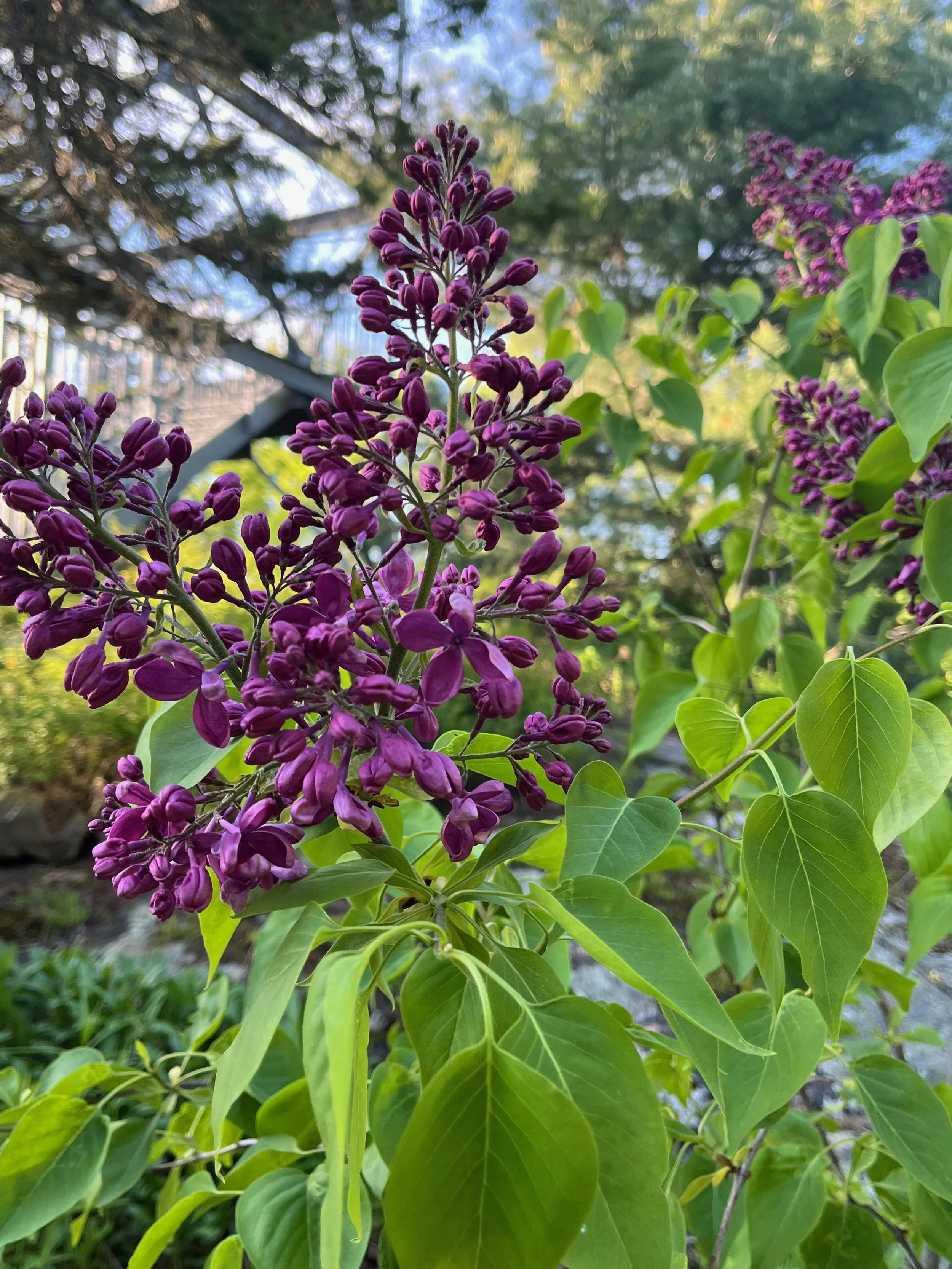
Number 12
Syringa vulgaris Krasavitska Moskvy (French Hybrid)
Fragrant white flowers with shell pink overtones emerge from distinctive pink flower buds in mid spring. Excellent for cutting.
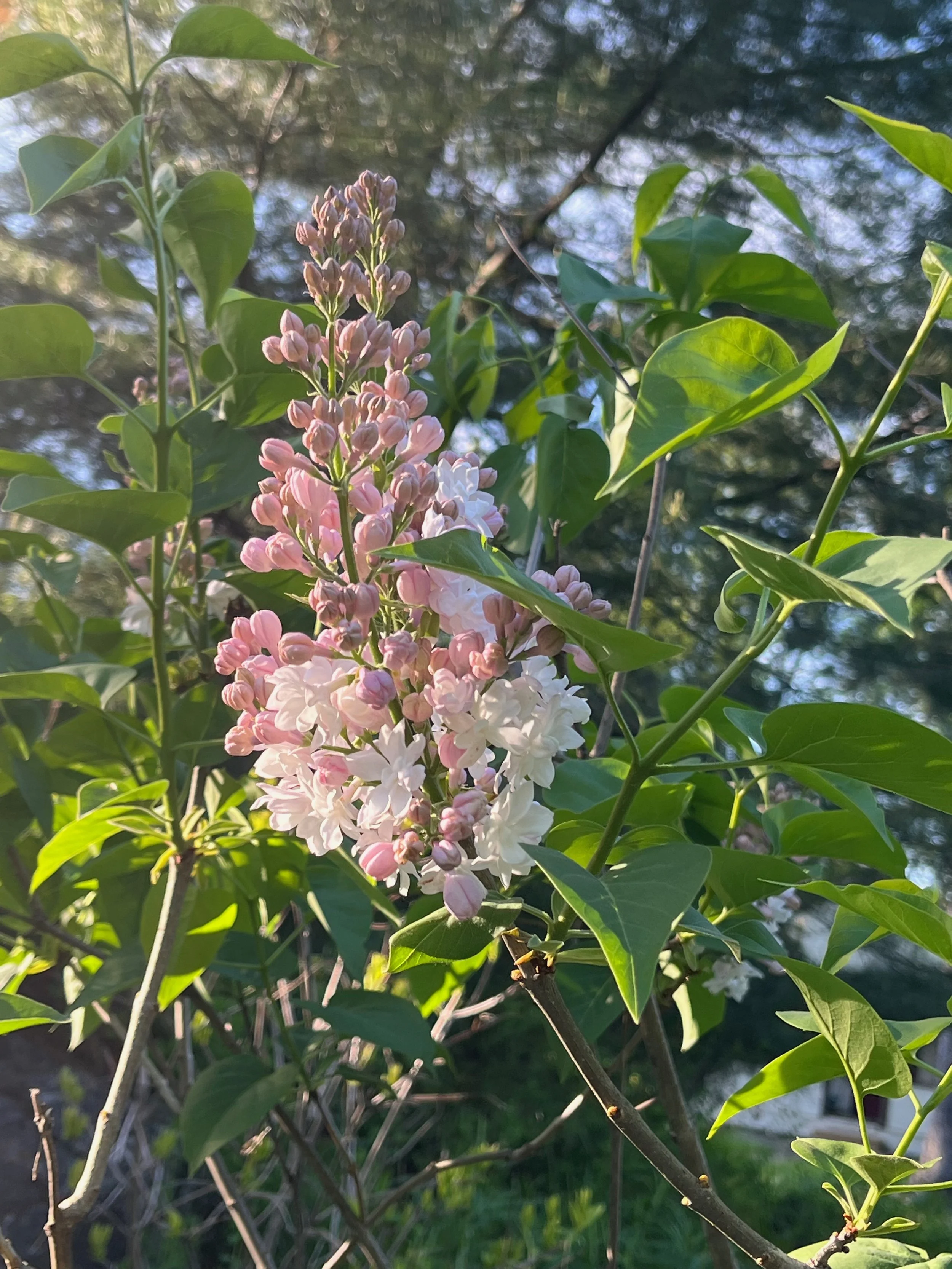
Boomerang Purple
Number 13
Syringa“Donald Wyman” (Preston Lilac)
Panicles of purple buds open to single reddish-purple flowers in mid-June

Donald Wyman
Number 14 - to be replaced.- it was a beauty and we may try again in 2026
Syringa bailbelle “Tinkerbelle”
Has a pleasing spicy fragrance and wine-red buds open to single pink blooms. Good specimen plant.
Number 15
Syringa“Minuet” (Preston Lilac)
A late flowering dwarf hybrid with light purple buds and light rosy flowers.

Minuet

Minuet and Donald Wyman (both Preston Lilacs) in bloom in mid-May
Number 16
Syringa“Agincourt Beauty” (Slater Collection French Hybrid, reg. 1971))
Deep purple bloom whose florets are the largest in the world.
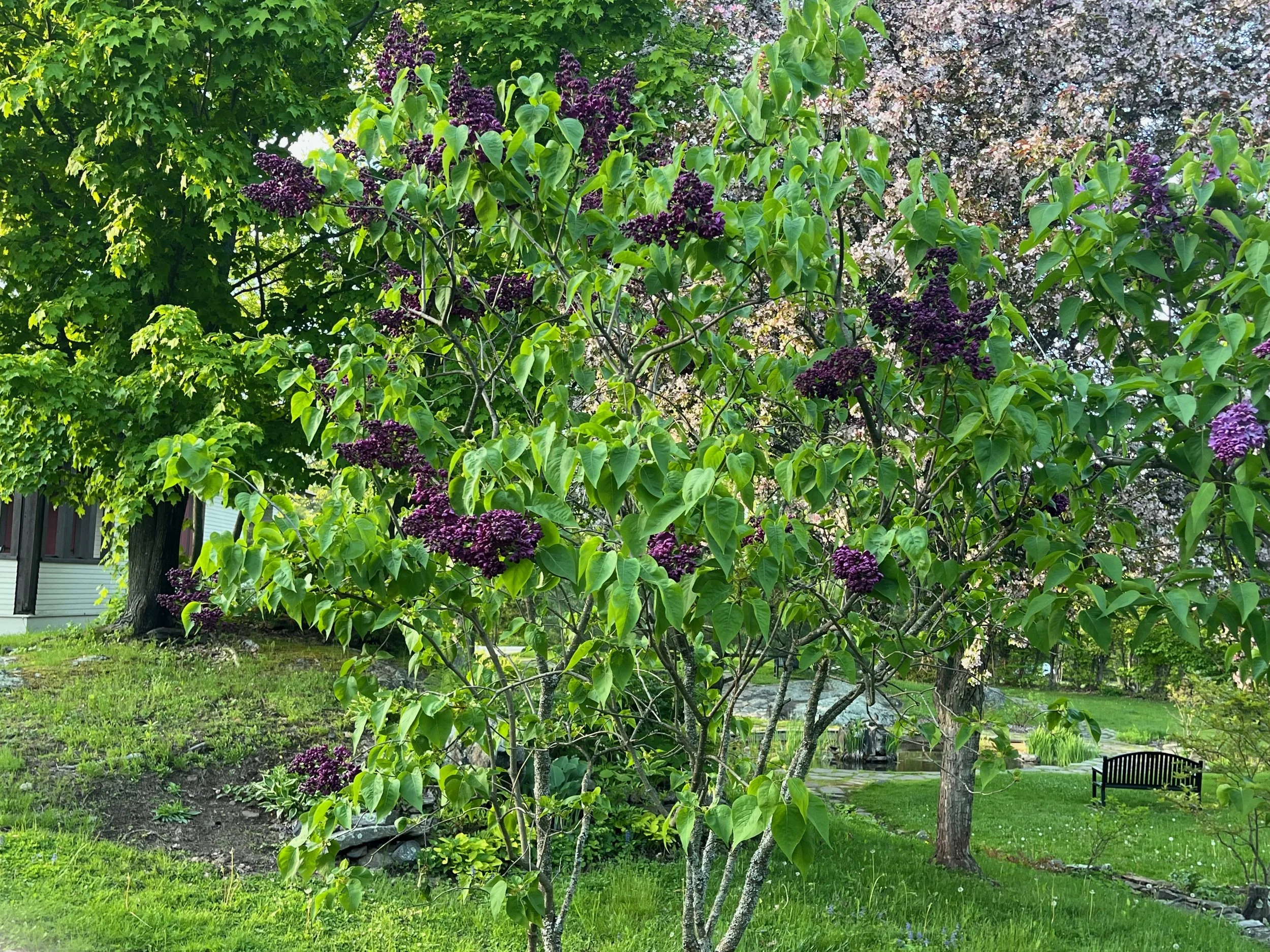
Agincourt Beauty
Number 17
Syringa“Mrs. Irene Slater” (Slater collection French Hybrid, reg. 2002)
Irene’s favourite, a soft mauve. Registered after Len’s death by the family.
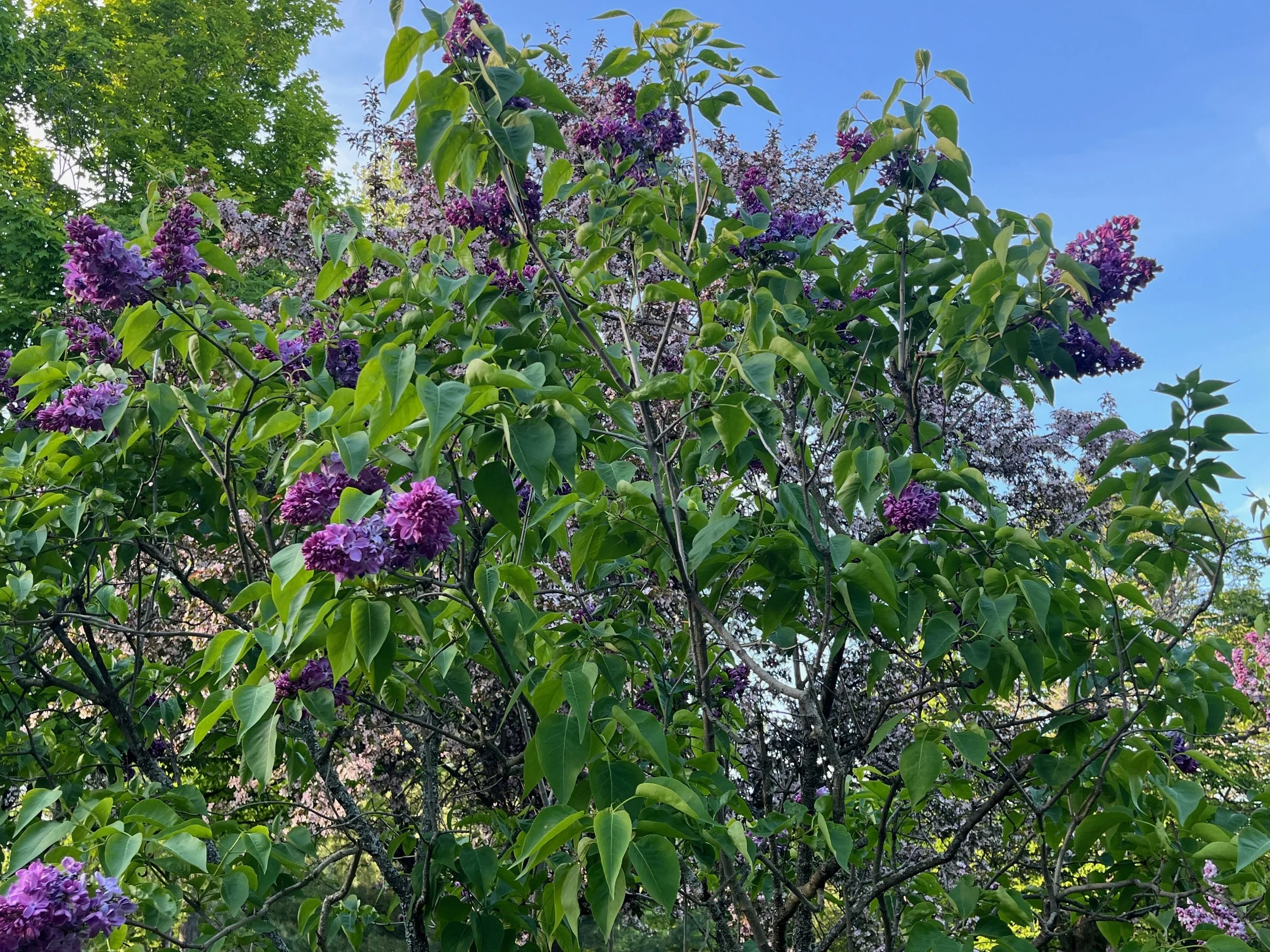
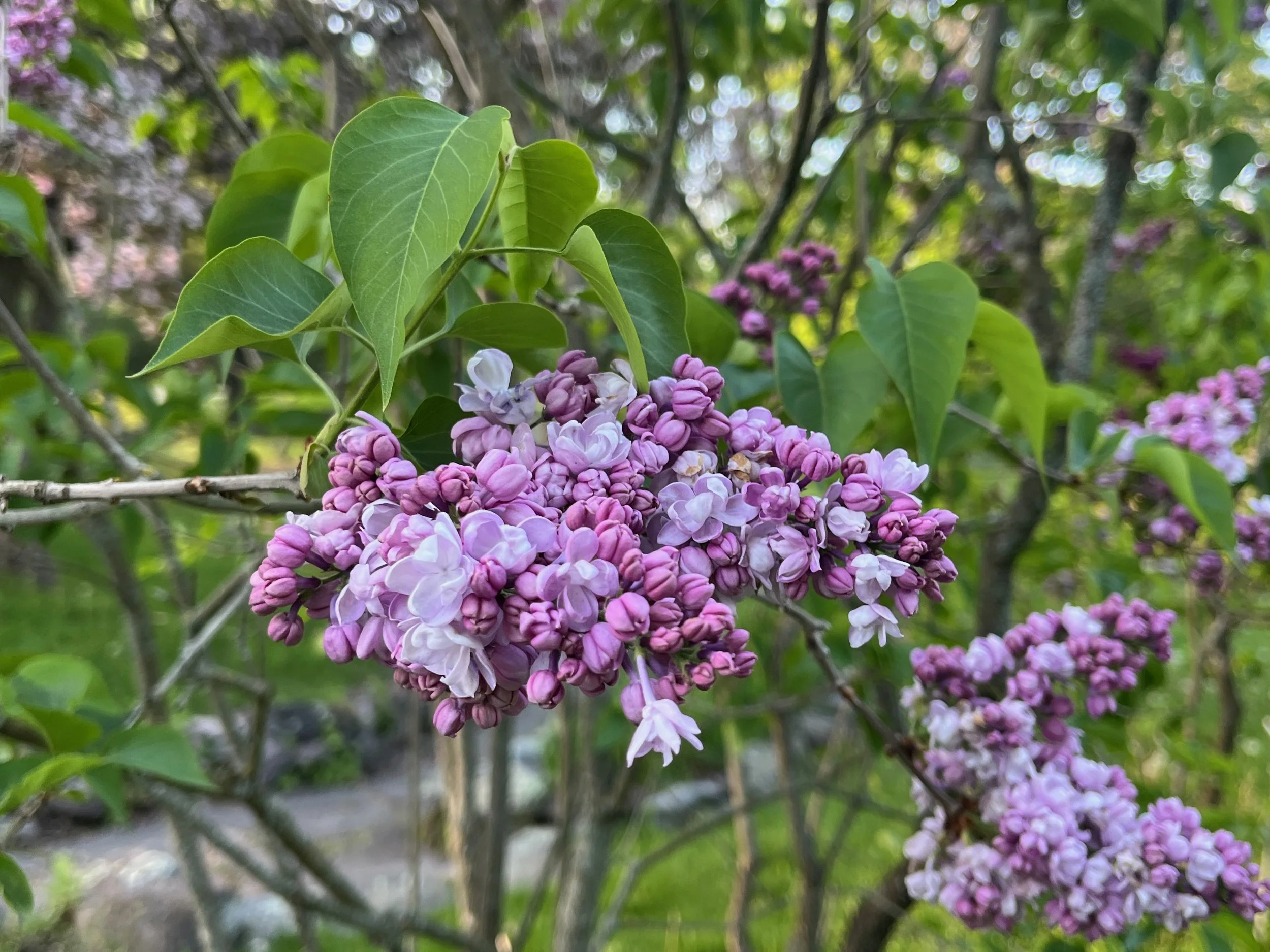
Number 18
Syringa “Lynne” (Slater Collection French Hybrid, not registered)
Double pink flower, special to the family
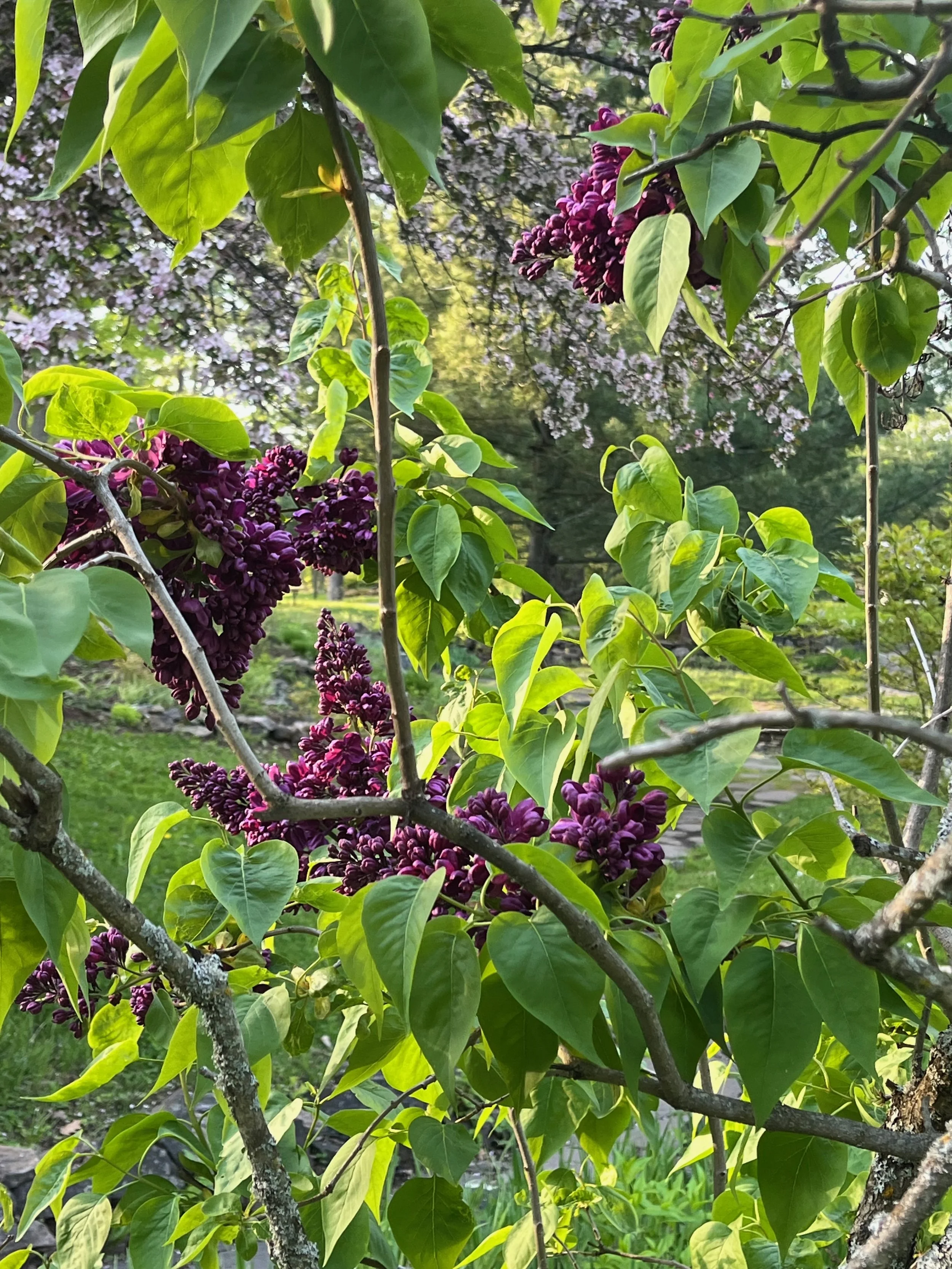
Number 19
Syringa“Agincourt Beauty” (Slater Collection French Hybrid, reg. 1971))
Deep purple bloom whose florets are the largest in the world
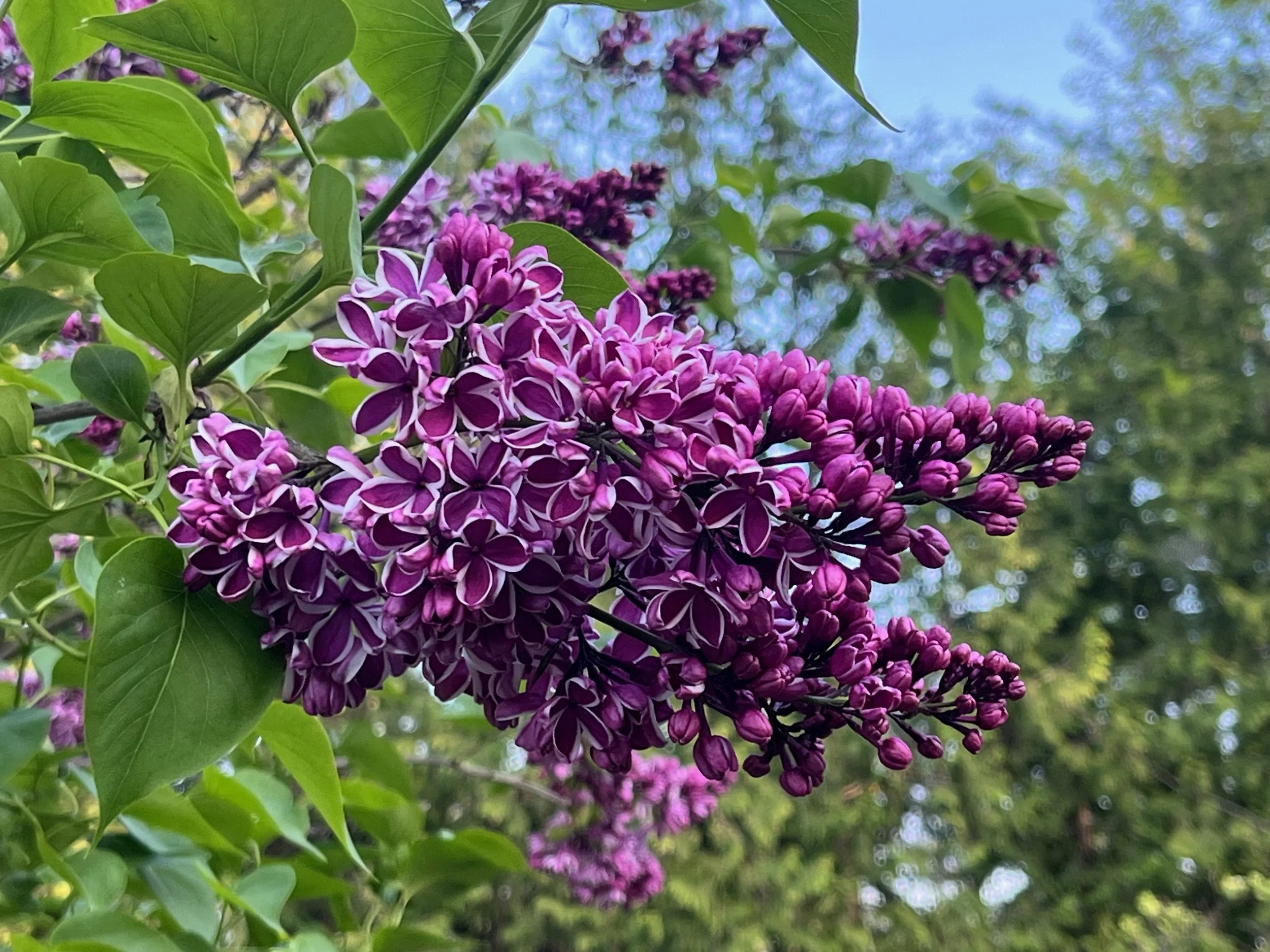
Number 20
Syringa “Sensation” (French Hybrid)
Single purple florets with a distinctive white border. A unique lilac.
Number 21
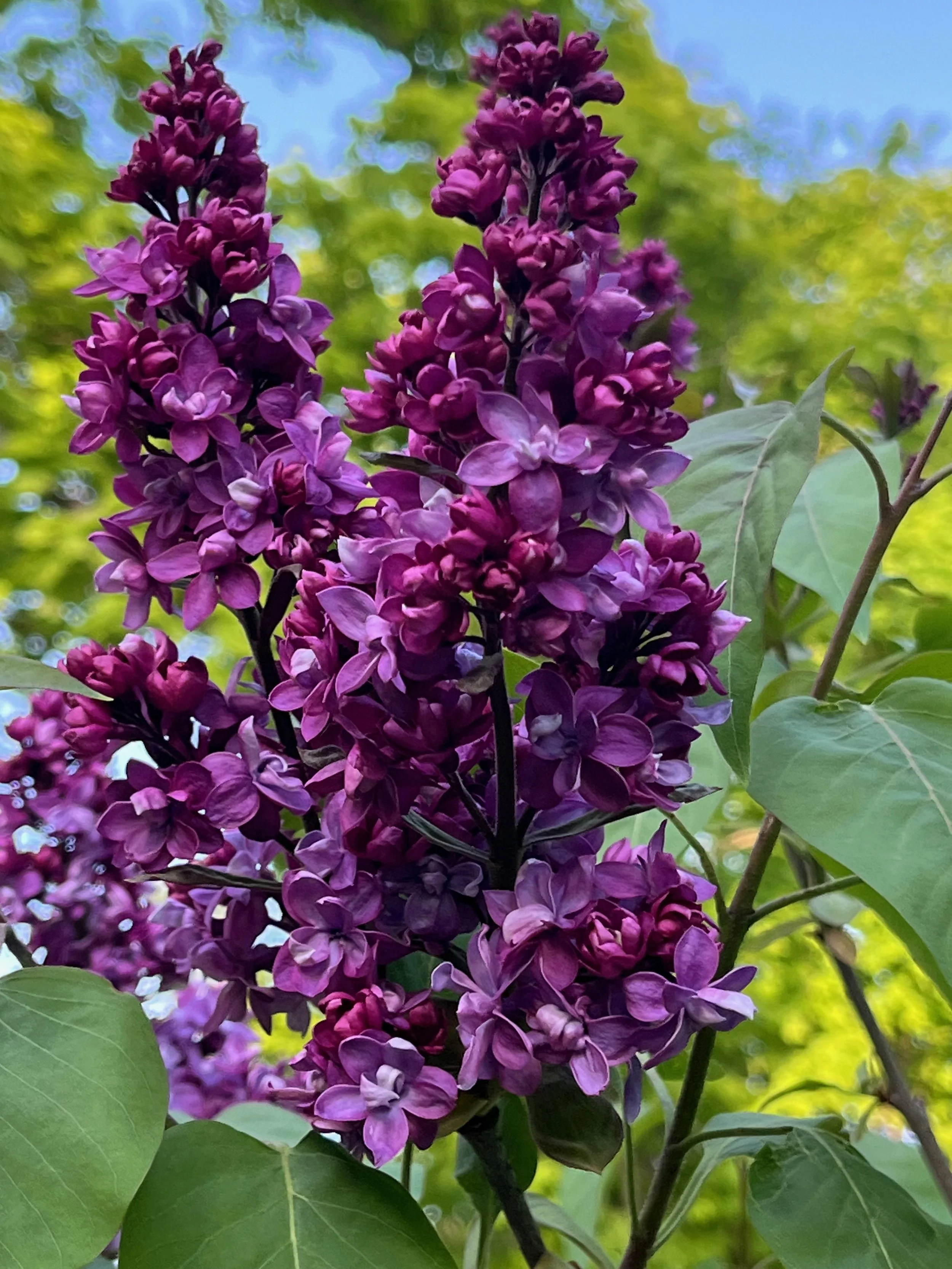
Syringa “Adelaide Dunbar” (French Hybrid)
Very fragrant deep purple double flowers. New stems are dark purple, enhancing the colour of the blooms.
Number 22
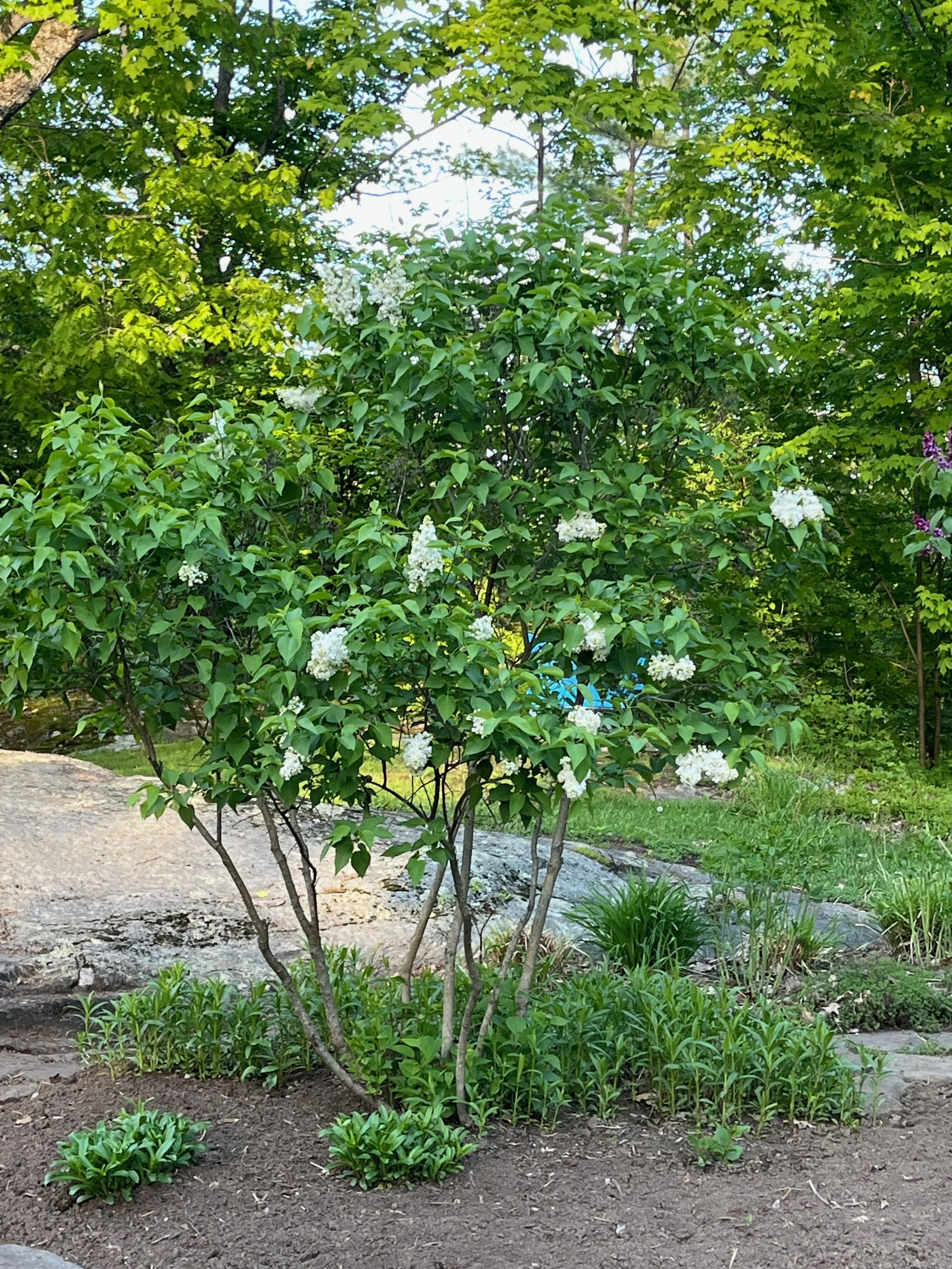
Syringa “Madame Lemoine” (French Hybrid)
Double white flowers on a wide, spreading bush. Very showy.
In addition to the numbered Lilacs on the Lilac Garden Walk, there are several very old, very large unnamed Preston Lilacs near the Pond. The one here as tall as the street light was removed in 2024 but is showing signs of new growth at the base with the fortitude of her hybridizer Isabella Preston.

Unnamed, existing Preston Lilacs.
There is also a very old tree lilac, Syringa reticulata, between the pond and sundial, shading the perfect spot to rest at the end of your walk. Sadly, it is a highly invasive tree that can be found throughout the woods and along the undeveloped portion of George Street.

Sitting in the shade of Syringa reticulata, the Japanese Tree Lilac